Tuesday, April 14, 2015
The Power of Teamwork
This week in second grade, we talked about what teamwork looks like not only at team sports or at recess playing kickball, but also in the classroom. Students watched the above video and then we discussed all the different ways the animals showed teamwork. Students came up with ideas like:
The animals all worked together
Stayed as a group
Communicated
Included everyone
Watched out for one another
Followed the leaders directions without argument
Worked for one common goal
Listened
Followed directions
After our discussion, we put "teamwork" into action and played "Transformation Rock, Paper, Scissors" that I found here. Students (including teachers and myself) enjoyed moving through the levels of egg, chicken, dinosaur, and All Knowing Being. During our reflection circle, students discussed ways they saw teamwork happening. They also decided they would like to add a few more transformations to the game.
Lesson adapted from Ms. Sepp's Counseling Corner

Friday, February 20, 2015
What Do I Do When My Daughter Comes Home From School Upset?
The article below from girlsleadership.org has some wonderful ideas about how to talk to your daughter when she comes home upset. Sometimes, it feels easier to step in and want to solve the problem for her but read below on some tips to help her be the problem solver first.

What Do I Do When My Daughter Comes Home From School Upset?
If there’s one question we get asked more than any other, it’s this: what do I do when my daughter is upset about a conflict with a friend or teammate?
As parents, we’re wired to protect our kids, so our first (understandable) instinct is to throw ourselves into solving the problem for her. Maybe we dish out advice, offer to call the other parent, or email the school. But it’s also our job as parents to teach our children how to manage their social challenges. To do that, we’ve got to give them a combination of skills — the know-how — and confidence — the belief that I can do it if I try.
In other words, our job is to cultivate resilience in our girls: the ability to handle stress and adversity in productive ways. Over the last twenty years, research has found that children and adolescents are struggling with resilience (particularly those in the middle class), leading to increased levels of stress, anxiety and depression.
When we try to solve our girls’ problems for them, we send the message that they can’t resolve conflicts on their own. We also tend to make the situation worse. In this video, we share alternatives to getting involved as a first step. By delaying your intervention, and allowing your daughter to wrestle with her options, you have the opportunity to help her:
- Recognize that all relationships involve some hurt, disappointment and setbacks, giving her a more realistic set of expectations and healthier definition of friendship.
- Consider multiple strategies to respond, allowing her to flex her problem solving muscles.
- Reflect on her feelings before acting, developing her emotional intelligence. Many Girls Leadership families keep this tool around to help during just these kind of tough days.
- Validate her feelings by affirming them with her, increasing her confidence to act.
This video introduces a way to approach social challenge with your daughter that you can use in almost any difficult situation. We urge you to use these tactics again and again; over time, with practice, your daughter will eventually begin having the conversation “with herself.” In other words, she’ll begin to use these strategies on her own.
If you are worried about your child’s safety, or are concerned she is being bullied, immediate intervention is always the best course of action.
Asking What She Wants to Do Builds Resilience: Wondering what to do after your daughter starts brainstorming some brilliant or terrible solutions to her challenge? Sign up for our newsletter to receive new, upcoming videos on how to role play at home.
Think About It: How do you tend to respond when your daughter is upset about something that happened with a peer? In what way does that response cultivate or pose a challenge to her resilience? When you were a child, what kind of help did your parents or guardians offer you? Has that influenced the way you react to your daughter?
Talk About It: Use these questions to start a conversation with girls about how you respond to her social challenges.
- When you have a problem with a friend, what is one thing you wish adults like me would do more of?
- What do you wish we did less of?
Further Resources:
Dr. Kenneth Ginsburg’s “7 C’s” of Resilience for parents
Monday, December 15, 2014
How to Develop Self-Esteem in Children
Below are some tips from the Austin Oaks Hospital on how to help build self esteem in children as well how to be encouraging.
Encourage your child. Focus on your child's resources, giving positive recognition to improve the child's self-concept and feelings of self-worth. Keep it simple, and be consistent. These four methods of encouragement can build a foundation of mutual respect for a positive parent/child relationship.
- Show faith and have confidence in your child. Allow him or her the opportunity to be responsible.
- Build self-respect by enthusiastically supporting your child's interests. Avoid comparisons with siblings or peers.
- Help children develop realistic goals, then recognize and acknowledge improvements and progress toward those goals.
- Focus on a child's strengths. Society tends to emphasize mistakes and faults. By emphasizing your child's strengths and assets, you offset those negative influences and help your children develop independence and self-determination.
10 Ways to Encourage Children
- Give responsibility.
- Show appreciation for contributions at home.
- Ask your child for opinions and suggestions.
- Encourage participation in decision making.
- Accept mistakes.
- Emphasize the process, not the product
- Turn liabilities into assets. Look for positive potential.
- Show confidence in your child's judgment.
- Demonstrate positive expectations.
- Develop alternate ways of viewing situations.
Wednesday, September 10, 2014
Time to Meet the Counselor...again!
1st and 2nd grade
students learned about “Who is the School Counselor” and what does the school
counselor do. We talked about how a
school counselor can help with things like:
- making new friends
- being included and
including others
- worries at school or home
- problem solving in a
peaceful way
- bullies
- manage strong feelings

2nd grade students talked about community and what makes our school
and classroom like a community. Then, we discussed what makes each of us
unique and what do we have in common that joins us together. I read, The Crayon Box That Talked by
Shane Derolf and Michael Letzig. Students
created handprints and wrote a special quality about themselves on the thumb
and each paper finger. Qualities
included, favorite food, something they are good at, favorite animals, or words
that describe them.
 |
| Lesson adapted from Crayola.com "Give our class a hand. Diversity Banner" |
1st grade students also read the The Crayon Box that Talked then made their own unique crayon. I made each classroom their very own crayon box and displayed it in the 1st grade hallway.

Tuesday, September 9, 2014
Austin ISD Every Day Counts!
It's a fact that
students who attend school regularly, learn more and are more successful than
students who do not. Parents who make regular school attendance a priority
also are helping their children learn to accept responsibility.
Attendance
patterns are formed early in life. Children who develop good attendance
habits in the early grades will be more likely to continue them throughout
their school careers. Here are some ways to support your child's good
attendance.
10 Tips for
Good Attendance
- Get your child to school on time,
every day, and make sure homework assignments are completed on time.
- Absences due to car trouble, a late
bus, and bad weather are considered Unexcused and will go on your child's
permanent record.
- Extended vacations, long weekends,
and frequent doctor appointments scheduled during school hours will cause
your child to fall behind in class.
- Being in school every day raises your
child's chances for scoring well on important tests throughout the year.
- Follow the proper school guidelines
for reporting Excused absences in a timely manner.
- Allow your child to stay home only
when he/she has a contagious illness or is too sick to be comfortable.
- Make sure your child exercises, eats
a balanced diet, and gets plenty of sleep. This will help him/her to be
mentally and physically ready to learn, and strengthen the immune system.
- Read all information sent home by the
school. Post important dates on a family bulletin board or on the
refrigerator.
- Give your child enough time to get
ready for school in the morning. Prepare lunches, pack school bags, and
lay out clothing the night
before.
- Monitor your child's attendance through AISD Parent Cloud.
What Else Can
I Do?
Value education
and give it high priority in your family! Convey a positive attitude about
school and treat going to school as part of the normal course of events,
something that is expected of your child. Let him know that school is the most
important thing in his life at this time, and that his future job
opportunities will depend on how well he handles his present "job"
(school). Help him develop good study and work habits and praise him when
he is successful. Get to know your child's friends as they have more influence
with him at this time in his life than you do. Get personally involved in
school activities, go to sporting events, attend plays and concerts, join the
PTA, volunteer, read the school paper. Know what's going on at school.
Please
remember: EVERY DAY COUNTS! Please visit Austin ISD Every Day Counts website for more helpful hints and information.
Friday, September 5, 2014
Time to meet the counselor!
My first lessons with the students are always about "Meeting the Counselor" and "What does my counselor do?" In Kindergarten, I talk about how counselor help students talk about feelings and what to do when you have strong feelings. I read the story, "Glad Monster, Sad Monster" written by Ed Emberly and Anne Miranda.


We look at the pictures and students share when they may have felt like a monster in the book. We also talk about the different colors the illustrator uses for each feeling. At the end of the lesson, I ask the students to think about how they are feeling today and what color would that feeling be. Then comes the fun part, we do a magic trick together. Using my Magic Coloring Book of Feelings, written by Robert Bowman and Kim Frank, the students take their feeling, throw them about my book, and poof, all my pictures are colored in. At the end of the lesson, I give the students a blank face to draw their own monster. At the bottom of the paper is my contact information for parents.
Thursday, September 4, 2014
Austin Child and Guidance Fall Groups
Austin Child Guidance Center provides mental health
evaluation and counseling services to youth age 17 and younger who are
experiencing emotional, behavioral or social problems and their families. For
more information regarding individual or group services, please contact ACGC at
512.451.2242 or click here.
Groups for Children and Parents
Eight Sessions, 6-7:30PM, One night a week
Low Cost Sliding Fee Scale. Free Childcare Provided.
ADHD Parents Group in ENGLISH
Tuesday 9/30/14 - Tuesday 11/18/14
Parents of children ages 5-12 years old with ADHD
Improve use of positive attention, rules, and appropriate discipline.
ADHD Parents Group in SPANISH
Monday 9/29/14 - Monday 11/17/14
Spanish speaking parents of children ages 5-12 years old with ADHD
Improve use of positive attention, rules, and appropriate discipline.
Social Skills/Friendship Group
Wednesday 10/1/14 - Wednesday 11/19/14
Group for children ages 6-9 years old
Kids learn about body language, communication, and socially appropriate interactions.
Conflict Resolution/Anger Management
Thursday 10/2/14 - Thursday 10/20/14
Group for children ages 9- 12 years old
Kids will focus on establishing trust within the group, developing solutions to common problems, exploring consequences, and practicing how to diffuse a heated situation
I am proud to be an Eagle!

"The No Place for Hate® initiative provides educators and
students with the resources to ensure that anti-bias and diversity education
are an integral part of the school curriculum. No Place for Hate® also
helps to create and sustain inclusive school environments where all students
feel valued and have the opportunity to succeed by promoting respect for
individual difference while challenging bigotry and prejudice. Launched
in Austin schools in the fall of 2004, the popular initiative has been embraced
by hundreds of campuses throughout the Central Texas region."
Thursday, August 28, 2014
Welcome Back Eagles!
Welcome to the Barton Hills Elementary Counseling Blog. My name is Sheila Wessels, and I am the counselor for this wonderful BHE community. I am very excited to work with you and your family this year. If at any time, you need to speak to me, please email or call. I am here for you!
Some information about myself, I have lived in Austin most of my life. My husband and our two daughters live in the North Austin area. We also have a very "talkative" dog named Gerdie. Our family loves playing outside, having dance parties, cooking, and watching football together. Prior to working with Austin ISD, I taught 3rd grade in Leander. After receiving my Masters in Education at Texas State, I began as a school counselor in the southern part of AISD and then moved to Barton Hills 5 years ago.
What is a school counselor you might ask?
A school counselor works with all students to develop their academic, career, personal, and social abilities. I meet these needs through whole class lessons, small group counseling, and/or individual support.
Classroom Based Counseling
I meet with every class every other week. That is about 200 students a week! I consult with teachers and grade levels to help meet specific needs in each lesson. The most common areas I focus on are conflict and resolution, managing emotions, stress, friendship, career readiness, bullying, and supporting our Social Emotional Learning Curriculum (SEL).
Individual Counseling
Students can request to see me by filling out a note and placing the note in my mailbox outside my office. I visit with students during recess or lunch time depending on the amount of time a student requires. I typically will not contact a parent unless I see the student 2-3 times. If a student requires more visits, I will be happy to suggest referrals to an outside counselor. Parents and teachers can also request for their child/student to visit with me.
Small Group Counseling
I run many groups that meet about a variety of topics throughout the year such as New to BHE, Friendship, Divorce, and Leadership. If I find that there are several students struggling with a common problem, I can create a group to work with them together. I find that it helps to students to know they are not alone! Parents and teachers can also suggest groups they may find beneficial. If your child is part of a group, I will send a letter home explaining the group as well as asking for your permission.
I am also here for parents and teachers on a consulting basis. Please contact me with any concerns. I want to make sure your child has a wonderful experience at Barton Hills Elementary!
Please check here frequently to see what's happening in the counseling world at BHE!
Some information about myself, I have lived in Austin most of my life. My husband and our two daughters live in the North Austin area. We also have a very "talkative" dog named Gerdie. Our family loves playing outside, having dance parties, cooking, and watching football together. Prior to working with Austin ISD, I taught 3rd grade in Leander. After receiving my Masters in Education at Texas State, I began as a school counselor in the southern part of AISD and then moved to Barton Hills 5 years ago.
What is a school counselor you might ask?
A school counselor works with all students to develop their academic, career, personal, and social abilities. I meet these needs through whole class lessons, small group counseling, and/or individual support.
Classroom Based Counseling
I meet with every class every other week. That is about 200 students a week! I consult with teachers and grade levels to help meet specific needs in each lesson. The most common areas I focus on are conflict and resolution, managing emotions, stress, friendship, career readiness, bullying, and supporting our Social Emotional Learning Curriculum (SEL).
Individual Counseling
Students can request to see me by filling out a note and placing the note in my mailbox outside my office. I visit with students during recess or lunch time depending on the amount of time a student requires. I typically will not contact a parent unless I see the student 2-3 times. If a student requires more visits, I will be happy to suggest referrals to an outside counselor. Parents and teachers can also request for their child/student to visit with me.
Small Group Counseling
I run many groups that meet about a variety of topics throughout the year such as New to BHE, Friendship, Divorce, and Leadership. If I find that there are several students struggling with a common problem, I can create a group to work with them together. I find that it helps to students to know they are not alone! Parents and teachers can also suggest groups they may find beneficial. If your child is part of a group, I will send a letter home explaining the group as well as asking for your permission.
I am also here for parents and teachers on a consulting basis. Please contact me with any concerns. I want to make sure your child has a wonderful experience at Barton Hills Elementary!
Please check here frequently to see what's happening in the counseling world at BHE!
Wednesday, May 14, 2014

Monday, May 12, 2014
6 Steps to a Calm Family
I really enjoy looking through Kidloutions Blog. They have some wonderful tips for families
and educators. Their latest blog suggest 6 tips for a calmer family. See if you can incorporate 1 or all into your
family. Please be sure to check Kidloutions
out for more helpful tips.
1. Be a Good Role
Model. Set the tone for a calm family by
being a calm parent. Take care of your
own emotional responses so your kids can learn to do the same. If you have over-the-top responses and are
prone to strong emotional outbursts, get help for yourself, either by reading
about managing your emotions better, going for counseling or therapy or hiring
an emotion coach. There are also online
programs that support adult in learning better ways to handle situations
2. Talk About
Feelings. Help your kids understand that
all feelings are okay. Help them learn
ways to cope with their feelings and resolve the difficult ones. If you struggle with this yourself, get help,
as noted above. Our resources were
specifically created to assist you in helping kids with feelings. Keep
communication open about emotions.
3. Build
Routines. Routines are the building
blocks of stability for kids and for us.
Erratic schedules breed uncertainty and stress. Kids particularly thrive on routines. You can build in routines for the morning,
evening, bedtimes and weekends. While we
always need to maintain an air of flexibility, a routine provides a foundation
for a sense of order and calm.
4. Eat Meals
Together. There’s something to be said for gathering around the table to share
a family meal. Research shows that there
is more family harmony and that kids fare much better when family meals are
part of their lives. It’s a great time to connect and model problem-solving
skills.
5. Have Family
Meetings. This one activity can make all
the difference in the world for your family.
During family meetings, have simple ground rules so everyone knows what
to expect. A great start would be that
one person talks at a time and there is no yelling allowed. Help each other keep these rules in mind
during your meeting.
6. Have a Code. When tempers flare and things are starting
heat up with conversations, etc., have a special code word that any family may
use to STOP the conversation, take a breather and come back when thing are more
calm and collected. This is a great way
to model to kids how to take care of themselves when they are getting too
upset, also.
Monday, May 5, 2014

Wednesday, April 30, 2014
An Interesting Article from a Local Austin Teacher
Teacher: Let’s stop talking about testing
Posted: 6:00 p.m. Monday, April 28, 2014
BY SARAH DILLE - SPECIAL TO THE AMERICAN-STATESMAN
http://www.mystatesman.com/news/news/opinion/teacher-lets-stop-talking-about-testing/nfhrz/
I heard a story on the radio on my way to work recently in which someone insisted: “What isn’t tested isn’t taught.”
If that statement were true, it would perhaps be the most depressing statement we could make about education today.
I’m lucky to know how false that statement is, and we do a disservice to the image of public education to insist that it is true. It certainly isn’t true in my classroom or the ones around me.
So I want the conversation to change.
I don’t want to hear any more about test preparation.
I don’t want to hear any more about Saturday boot camps or test preparation packets or anchor charts featuring the latest test-taking strategies.
I don’t want to hear people judging one school over another based simply on test scores.
I want to start talking about what happens beyond the test. I want Austin to know that our schools are not testing factories, but they are places of growth and learning. There are so many ways our schools are serving our students well.
I want us to start talking about the students who sit in a world geography classroom and learn about Africa and Afghanistan and realize that “history is not just learning about dead guys and gory battles; it is learning how men and women influenced different ideas and inspired change in the world,” as one former student recently wrote. She sat in world geography and had her eyes opened. She now plans to help make more change in the world.
And guess what? There was no standardized test for world geography.
I want us to start talking about real writing. About students who worked together as a class to publish a satirical newspaper to distribute to students and teachers on April Fool’s Day. About students who enter their poetry in competitions and submit to literary magazines. About students who write reports on issues that affect them — funding higher education, raising the minimum wage and caring for the environment — and send them off to their state senators so they start to see that their voice indeed matters.
Because isn’t writing for a real audience much more important than writing 26 lines for a “grader”?
I want us to start looking at all that happens in a school beyond the core subjects, to the places where students truly learn to work together, to lead, to lend a hand, to question. Let’s talk about the district-winning softball team. The dance team that spends hours before and after school perfecting their show. The one-act play participants who make it to regionals, the band members who march in the heat because they love music and their school, the National Honor Society students who volunteer their time in the community, the PALS students who take time to mentor elementary school children.
Because doesn’t a child’s emotional education matter at least as much as their academic one?
I want us to talk about students who have internships with the city as part of their government class and who write and edit the school newspaper as budding journalists. I want us to start talking about the students who constructed handmade cutting boards for the teachers for Christmas in their construction trades class, the students who do hair before school as they earn their cosmetology license, the students who fix cars in the auto shop or cook the faculty lunch in the culinary room.
As my principal said in a meeting last week, “Even though we are in testing season, I don’t want that to define who we are.”
Our students will go off to live in a world that doesn’t present problems as multiple choice questions, and there are so many ways that schools and teachers make sure they are ready for it. Teachers know that a student’s success is measured not by one test on one day, but by growth over the year.
Good teachers are not preparing the students for a test. They are preparing them for life.
I wish that we could talk about that on the radio and in the newspapers. I wish we could present stories of students challenging themselves to learn, of teachers pushing students to think creatively, of administrators thinking outside the box (or the bubble sheets) to make a truly well-rounded educational experience possible for all kids.
We talk too much about the test.
Let’s change that.
Dille teaches English at Crockett High School and was honored as Teacher of the Year 2013 by the Austin school district.
Posted: 6:00 p.m. Monday, April 28, 2014
BY SARAH DILLE - SPECIAL TO THE AMERICAN-STATESMAN
http://www.mystatesman.com/news/news/opinion/teacher-lets-stop-talking-about-testing/nfhrz/
I heard a story on the radio on my way to work recently in which someone insisted: “What isn’t tested isn’t taught.”
If that statement were true, it would perhaps be the most depressing statement we could make about education today.
I’m lucky to know how false that statement is, and we do a disservice to the image of public education to insist that it is true. It certainly isn’t true in my classroom or the ones around me.
So I want the conversation to change.
I don’t want to hear any more about test preparation.
I don’t want to hear any more about Saturday boot camps or test preparation packets or anchor charts featuring the latest test-taking strategies.
I don’t want to hear people judging one school over another based simply on test scores.
I want to start talking about what happens beyond the test. I want Austin to know that our schools are not testing factories, but they are places of growth and learning. There are so many ways our schools are serving our students well.
I want us to start talking about the students who sit in a world geography classroom and learn about Africa and Afghanistan and realize that “history is not just learning about dead guys and gory battles; it is learning how men and women influenced different ideas and inspired change in the world,” as one former student recently wrote. She sat in world geography and had her eyes opened. She now plans to help make more change in the world.
And guess what? There was no standardized test for world geography.
I want us to start talking about real writing. About students who worked together as a class to publish a satirical newspaper to distribute to students and teachers on April Fool’s Day. About students who enter their poetry in competitions and submit to literary magazines. About students who write reports on issues that affect them — funding higher education, raising the minimum wage and caring for the environment — and send them off to their state senators so they start to see that their voice indeed matters.
Because isn’t writing for a real audience much more important than writing 26 lines for a “grader”?
I want us to start looking at all that happens in a school beyond the core subjects, to the places where students truly learn to work together, to lead, to lend a hand, to question. Let’s talk about the district-winning softball team. The dance team that spends hours before and after school perfecting their show. The one-act play participants who make it to regionals, the band members who march in the heat because they love music and their school, the National Honor Society students who volunteer their time in the community, the PALS students who take time to mentor elementary school children.
Because doesn’t a child’s emotional education matter at least as much as their academic one?
I want us to talk about students who have internships with the city as part of their government class and who write and edit the school newspaper as budding journalists. I want us to start talking about the students who constructed handmade cutting boards for the teachers for Christmas in their construction trades class, the students who do hair before school as they earn their cosmetology license, the students who fix cars in the auto shop or cook the faculty lunch in the culinary room.
As my principal said in a meeting last week, “Even though we are in testing season, I don’t want that to define who we are.”
Our students will go off to live in a world that doesn’t present problems as multiple choice questions, and there are so many ways that schools and teachers make sure they are ready for it. Teachers know that a student’s success is measured not by one test on one day, but by growth over the year.
Good teachers are not preparing the students for a test. They are preparing them for life.
I wish that we could talk about that on the radio and in the newspapers. I wish we could present stories of students challenging themselves to learn, of teachers pushing students to think creatively, of administrators thinking outside the box (or the bubble sheets) to make a truly well-rounded educational experience possible for all kids.
We talk too much about the test.
Let’s change that.
Dille teaches English at Crockett High School and was honored as Teacher of the Year 2013 by the Austin school district.
Thursday, April 10, 2014

Tuesday, April 8, 2014
Messaging Apps that Parent Should Know About
The following article was sent to me by our technology teacher that he found on commonsensemedia.org. Definitely a great read for all parents!
Trend Alert: 6 Messaging Apps That Let Teens Share (Iffy) Secrets
Capturing and posting casual moments seems consequence-free. But, of course, it's not.
March 26, 2014
Senior Content Specialist

You probably never thought you'd see the day when Facebook wasn't the center of teens' universe. But keeping up with Facebook friends through ad-filled newsfeeds and lengthy profiles, especially given the fact that everyone knows your name, is starting to feel tiresome to many teens.
Facebook is still a go-to place for many things, such as wishing someone a happy birthday or stalking a crush. However, newer social apps make it easier, faster, and more fun to capture and share fleeting moments -- sometimes anonymously. These temporary and anonymous-messaging apps provide an environment that feels more appropriate to the random, silly, saucy, and experimental sides of the average teenager.
Perhaps most importantly to teens, these apps can feel consequence-free. But of course they're not. Data never really disappears, and anonymity carries big risks. If you don't recognize the apps your kid is currently obsessing over, here's what you need to know:
Temporary Apps
Temporary apps allow people to send messages and images that self-destruct after a set window of time. Teens can use these apps to more carefully manage their digital trails -- so long as they don't share things they wouldn't normally send otherwise.
Snapchat: A messaging app that lets users put a time limit on the pictures and videos they send before they disappear.
Why it's popular: Snapchat's creators intended the app's fleeting images to be a way for teens to share fun, light moments without the risk of having them go public. And that's what most teens use it for: sending goofy or embarrassing photos to one another. Teens may pay more attention to Snapchats, knowing they'll disappear in a matter of seconds.
What parents need to know:
- Many schools have yet to block it, which is one reason why teens like it so much.
- It's a myth that Snapchats go away forever. Data is data: Whenever anything is sent online, it never truly goes away. (For example, the person on the receiving end can take a screenshot of the image before it disappears.) Snapchats can even be recovered.
- It can make sexting seem OK. The seemingly risk-free messaging might encourage users to share pictures containing inappropriate content.
Burn Note: A texting-only app that erases messages after a set period of time. Messages are stored until first view and then deleted.
Why it's popular: Unlike other temporary apps, Burn Note's unique display system makes it more difficult (but not impossible) to copy or take a screenshot of sent messages. Though sending sensitive information via SMS (such as a PIN) isn't the smartest idea, Burn Note makes it safer.
What parents need to know:
- Deleted texts cannot be recovered. Burn Note claims to completely expunge deleted messages from its server. Unread messages self-destruct after 30 days.
- Burn Note doesn't share personal information with third parties for analytics or advertising purposes.
- Recipients don't need to have Burn Note. You can send a message to an email address or a phone contact. The note will show up as a link.
Anonymous Apps
On the positive side, going incognito online helps us express ourselves in ways we might not be able to in the real world. On the negative side, anonymous apps are often riddled with inappropriate content. They also can encourage bullying behavior.
Whisper: A social "confessional" app that allows users to post whatever's on their mind. Users type a confession, add a background image, and share it with the Whisper community. It’s intended for users age 17 and older.
Why it's popular: There’s something to be said about sharing one's innermost thoughts without any repercussions, especially if they're not socially acceptable. It’s cathartic. For those who simply choose to browse, Whisper can be amusing, heartbreaking, troubling, and comforting all at once.
What parents need to know:
- The scenarios can be hard to stomach. Reading that a teacher has fantasies about his or her students or that someone’s father is going to be released from jail and start a custody battle can weigh heavily on teens. Some confessions, however, are totally benign (and funny!).
- There is plenty of inappropriate content. All too often, whispers are sexual. Some use Whisper to solicit others for sex (using the app's geo-location "nearby" feature). Strong language and drug and alcohol references also are prevalent (for example, "My wife and I were both high on our wedding day" and "I dropped acid with my mom once").
- Whispers can go public. Entertainment news sites, such as BuzzFeed, are beginning to feature Whispers. The problem? When secrets -- including the embellished or fake ones -- become news, we may begin to find ourselves in tabloid territory.
Secret - Speak Freely: A social-media app that's designed to let people voice whatever's on their minds anonymously.
Why it's popular: Similar to Whisper, Secret lets people vent, confess, and share freely -- without anyone knowing who said what.
What parents need to know:
- It tries to prevent users from defaming others. When Secret first launched in Silicon Valley, its adult users started using it to smack-talk their coworkers and bosses. Secret now detects when you mention someone by name (most of the time) and sends you a warning about it.
- It requires some private information. Despite the fact that it promises user anonymity, it requires your email address and phone number.
- Kids may encounter strong language. We came across "hell" and "f--k" almost immediately.
Ask.fm: A social site that lets kids ask questions and answer those posted by other users -- sometimes anonymously.
Why it's popular: Although there are some friendly interactions on Ask.fm -- Q&As about favorite foods or crushes, for example -- there are lots of mean comments and some creepy sexual posts. This iffy content is part of the site's appeal for teens.
What parents need to know:
- Bullying is a major concern. The British news website MailOnline reported that the site has been linked to the suicides of several teens. Talk to your teens about cyberbullying and how anonymity can encourage mean behavior.
- Anonymous answers are optional. Users can decide whether to allow anonymous posts and can remove their answers from streaming to decrease their profile's visibility. If teens do use the site, they'd be best turning off anonymous answers and keeping themselves out of the live stream.
- Q&As can appear on Facebook. Syncing with Facebook means that a much wider audience can see those Q&As' behavior.
Omegle: An anonymous chat client through which users discuss anything they'd like. Its conversations are filled with lewd language and references to sexual content, drugs and alcohol, and violence.
Why it's popular: Online chat rooms have been around for ages, as have the iffy and inappropriate conversations that happen in them. Though there are many misconceptions about "online predators," it’s true that risky online relationships -- though rare -- more frequently evolve in chat rooms when teens willingly seek out or engage in sexual conversation.
What parents need to know:
- Users get paired up with strangers. That's the whole premise of the app. And there's no registration required.
- This is NOT an app for kids and teens. Omegle is filled with people searching for sexual chat. Some prefer to do so live. Others offer links to porn Websites.
- Language is a big issue. And since the chats are anonymous, they're often much more explicit than with someone who can be identified.
The best way to approach these apps with your kids? Talk to them about their online reputations -- not in terms of "getting caught" by teachers, college-admissions officers, or future employers, but as a matter of being the best person they can possibly be. Acknowledge that, chances are, they'll come across extreme, inappropriate, or hurtful content online…and that it's OK for them to ask you about it, especially if it upsets them. These kinds of conversations will be far from fleeting -- the benefits will last a lifetime.
Please visit Common Sense Media for more information about "parenting, media and everything in between".
Thursday, March 6, 2014
How can parents help their children minimize unnecessary stress?
Mary Jo Rapini, LPC
Licensed
Professional Counselor
The loss of childhood is a serious and complex problem
facing many families in America. It is clear that our kids are growing up very
quickly in a generation full of electronics, never experienced by their
parents.
Recent statistics show that more than 50 hours per week of a
child’s life is spent interacting with some sort of screen media. In addition,
kids are sleeping less; they are involved in more non-family activities; they
are being treated as confidantes by their parents; and they have less time to
be still or interact with family. And this doesn't come without consequences.
Increased stress, as well as a need for
immediacy and awkwardness with normal communication are common results. Kids
also feel more overwhelmed with emotions they don’t understand or have the
ability to process.
How can we protect our children’s youth, help them manage
necessary stress and minimize unnecessary stress? The number one way to manage
stress is to prevent it from happening. This article offers suggestions for
parents on managing their own stress, as well as the stress of their children.
Do recognize the negative effects of
stress
An overload of information or an inability to manage
information leads to anxiety, depression and stress in our children. While
attention deficit disorders are a real issue for today’s kids, environmental
influences cannot be overlooked. Many parents are as stressed—if not more than
their children. And when children don’t understand what is going on, they
typically try to help their parents by taking on some of their unspoken worries
and concerns.
It is not uncommon for parents to travel for work, vent personal
information to their children or sign their child up for too many activities.
This can push a healthy balance to an unhealthy point for a child. Just as
parents need down time, so do kids.
As a parent, prepare yourself to not expect perfection.
Instead, focus on being happy and raising kids who feel good about themselves.
The easiest way to do this is to focus on all you love and what is going great
in your life. If your child is getting all B’s with one C or D, focus on the
B’s, with encouragement toward improving the C or D.
Minimize stress with exercise and healthy foods. When you
make healthy choices, you become happier. Taking ten minutes for yourself each day
to exercise minimizes stress and anxiety, while also helping demonstrate a
healthy lifestyle for your child.
Take care of yourself spiritually. Your faith and beliefs
can help you relieve stress. Praying, meditating and sharing your life with a
community helps you feel less burdened. This is a more appropriate sounding
board than using your children.
Talk to your kids about what is causing the stress in their
life, and less about what is causing stress in your own life.
Focus on helping your child develop a routine to follow each
day. Consistency and structure minimize stress in kids. Develop a bedtime plan
and ensure that your child is getting plenty of sleep. Catching up on weekends
is not okay.
Planning family meals rather than going out for fast food
will reduce stress. Healthy eating doesn't have to be time consuming, and it
allows you to spend more time engaged with your child.
Less planned activities and having time to journal or work
on hobbies gives children more control and encourages healthy coping and stress
management.
Summary
You cannot escape all stress. While it is important to
recognize that some stress is good, when your child becomes anxious, weepy and
unable to focus, it is time to make changes in your family’s lifestyle. It is
possible for parents to help their children minimize and manage daily stress.
Wednesday, March 5, 2014
5 Things That Build Self-Esteem in Kids

Today, I found this great article written by Kidlutions. These 5 tips are very easy to do and can really build up your child's self-esteem.
Building REAL Self-Esteem in Kids
Most parents want to "up" their child's self-esteem. It's a common question I get from parents. "How do I make sure my child is confident enough? How can I help her believe in herself? How can she eventually bounce back from disappointment?"
Well, there a few things that parents should know that can help support their child in developing all of the above. We know constant praise doesn't work, and in fact, may backfire. The most helpful things of all seem to be:
1. Stability Counts. Providing a stable living environment wherein the child feels love and unconditional positive regard. This goes beyond the basic needs of food, shelter and clothing. It includes routine, limits, laughter, love and sense of belonging. Knowing that you and your home are a safe haven provides the foundation on which all other building blocks for self-esteem will rest. Every child in the world needs this.
2. Challenge. Allow your children to be challenged. This stretches their mental muscle and let's them feel accomplished when they complete a task they had not earlier been able to master. Focus on progress, not perfection. Cheer your child on to victory. Support her in her defeat.
3. Listen Up. Your child needs your undivided attention. No, not all day long. Thank goodness, because if this were the case, you'd never get anything done. Your child needs some time alone to dream, doodle and entertain herself. But, she also needs and deserves your full attention, at times. Put that iPad or phone down. Stop multi-tasking. Look into your child's eyes. LISTEN. Really listen. Reflect back to her what she is asking or saying to you. Make her feel understood and wanted.
4. Praise Effort, Not Outcomes. "You worked really hard on folding those socks. Look how many you did!" "You never gave up on that math homework! Good for you!" "It's fun for me to watch you play soccer. When you got knocked down, you got right back up and kept running! Way to go!" "You studied hard for that spelling test and did your very best! Excellent effort!"
5. Help Children Be YOU-nique. Each and every child is magnificent. (So is every adult.) When we look for it, we can find amazing qualities in every child we meet. Help your child identify what makes her unique, what makes her stand out, what makes her special and different from anyone else in the world.
The list of things that help kids build self-esteem could go on and on. This will give you a start. Add your own ideas. Just avoid the constant, ongoing praise that kids drown out and stop believing in after a while. It backfires from it's intended purpose. Focus on helping your child be strong and secure in herself. Self-esteem is an inside job! Help her make her own internal dialogue STRONG and CLEAR, so she learns to trust and rely on herself.
Most parents want to "up" their child's self-esteem. It's a common question I get from parents. "How do I make sure my child is confident enough? How can I help her believe in herself? How can she eventually bounce back from disappointment?"
Well, there a few things that parents should know that can help support their child in developing all of the above. We know constant praise doesn't work, and in fact, may backfire. The most helpful things of all seem to be:
1. Stability Counts. Providing a stable living environment wherein the child feels love and unconditional positive regard. This goes beyond the basic needs of food, shelter and clothing. It includes routine, limits, laughter, love and sense of belonging. Knowing that you and your home are a safe haven provides the foundation on which all other building blocks for self-esteem will rest. Every child in the world needs this.
2. Challenge. Allow your children to be challenged. This stretches their mental muscle and let's them feel accomplished when they complete a task they had not earlier been able to master. Focus on progress, not perfection. Cheer your child on to victory. Support her in her defeat.
3. Listen Up. Your child needs your undivided attention. No, not all day long. Thank goodness, because if this were the case, you'd never get anything done. Your child needs some time alone to dream, doodle and entertain herself. But, she also needs and deserves your full attention, at times. Put that iPad or phone down. Stop multi-tasking. Look into your child's eyes. LISTEN. Really listen. Reflect back to her what she is asking or saying to you. Make her feel understood and wanted.
4. Praise Effort, Not Outcomes. "You worked really hard on folding those socks. Look how many you did!" "You never gave up on that math homework! Good for you!" "It's fun for me to watch you play soccer. When you got knocked down, you got right back up and kept running! Way to go!" "You studied hard for that spelling test and did your very best! Excellent effort!"
5. Help Children Be YOU-nique. Each and every child is magnificent. (So is every adult.) When we look for it, we can find amazing qualities in every child we meet. Help your child identify what makes her unique, what makes her stand out, what makes her special and different from anyone else in the world.
The list of things that help kids build self-esteem could go on and on. This will give you a start. Add your own ideas. Just avoid the constant, ongoing praise that kids drown out and stop believing in after a while. It backfires from it's intended purpose. Focus on helping your child be strong and secure in herself. Self-esteem is an inside job! Help her make her own internal dialogue STRONG and CLEAR, so she learns to trust and rely on herself.
Friday, January 31, 2014
Are You a Bucket Filler?
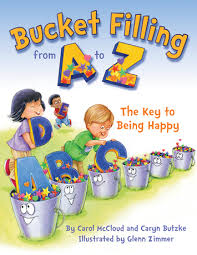
Students in Kindergarten through 2nd grade have been focusing on being a "Bucket Filler". What is Bucket Filling you ask? Bucket Filling is when you do something kind for others. Have You Filled a Bucket Today, written by Carol McCloud is a wonderful story that teaches children to be kind to others. But, watch out for the Bucket Dippers! This year, I found a different version of Have You Filled a Bucket Today, called Bucket Filling from A to Z. Students in second grade created a "Bucket Filling" Tips Acrostic Poem using the first letters in their names. Students got very creative! Some examples are:
R: Respect Everybody
C: Listen while others are talking
B: Be a friend and not a bully
O: Offer help
A: Accept differences
T: Tell someone a nice thing
S: Smile and see what happens :)
Here are my bucket filling tips:

Wednesday, January 15, 2014
BHE No Name Calling Week January 21-24

BHE
“No Name-Calling” Week
January 21-24
“No Name-Calling” Week was inspired by a young adult novel
entitled "The Misfits" by popular author, James Howe. The book tells
the story of four best friends trying to survive the seventh grade in the face
teasing and taunts. Motivated by the
inequities they see around them, the "Gang of Five" (as they are
known) creates a new political party during student council elections and run
on a platform aimed at wiping out name-calling of all kinds. The No-Name Party
in the end wins the support of the school's principal for their cause and their
idea for a "No Name-Calling Day" at school.
Schools across the nation will be celebrating
“No Name-Calling” Week. BHE will be
participating in the annual “No-Name Calling” Week during the week of January
21. This year’s theme is
“Kindness”. BHE
believes in celebrating kindness while working to create a safe school free of
name-calling, bullying and bias. During
the counselor class time, Ms. Wessels will be focusing on lessons that teach
kindness, bullying, and name-calling.
Please talk with your student about what they are learning.
To show our support, each day, students and
staff, will have the choice to dress up in the following ways:
Tuesday: “Put a Rest to Name-Calling”
wear PJ’s to school.
Wednesday: “Put
a Cap on Name-Calling” wear a hat of choice
Thursday: “Don’t Stuff Your Feelings
Inside…Tell Someone!” Bring a favorite stuffed animal to school.
Friday:
Book
Character Day: Students and staff select a book character that they love and
think about and share the
positive traits of that character. Book
Character Assembly will begin at 8:45 in the cafeteria.
Wednesday, January 8, 2014

Subscribe to:
Posts (Atom)